
As part of our ongoing AI experimentation in 2024 within digital communications, you may have noticed we’ve been exploring the use of AI-driven image enhancement tools—specifically Adobe Photoshop’s generative AI features, such as Content-Aware Fill and Generative Expand.
Our aim has been to enhance existing Library images in subtle but effective ways that enhance the subject matter without altering the core reality of the image. This careful balance allows us to improve visual impact without compromising authenticity, and subsequently the trust of our audiences.
A bit of background
Within the Library, and more broadly across the University, there has been growing interest in using AI tools to tackle practical challenges faced by staff, while improving user experience. In digital communications, we were keen to engage with these emerging technologies.
Photoshop introduced generative AI tools in its beta version in May 2023. These tools were promoted as accessible for all users, regardless of technical expertise, and designed to maximise efficiency. Over the following year, Adobe continued to develop these features, including:
- Generative Expand: Allows users to expand the boundaries of an image, intelligently filling the added space based on the original content.
- Content-aware Fill: Enables users to remove unwanted elements from a photo by seamlessly blending surrounding areas.
These tools present an efficient way to enhance visuals without the need for complex manual editing, aligning well with the often fast-paced nature of digital communications in the Library.
At both the Library and the University level, the emphasis is not on pure image creation from scratch but rather on enhancement and problem-solving using AI. In September 2023, the University established the DCSMR AI Working Group, which subsequently published a set of AI usage guidelines for Professional Services. These guidelines centred around:
- A strategic and collaborative approach to AI use
- The preservation of a distinct University tone of voice
- Maintaining public trust through responsible use of AI, especially in visual media.
A central tenet of these guidelines is that our authority must be upheld. Public concerns about AI-generated misinformation and manipulated media make it essential that we continue to demonstrate human oversight and ethical judgement in our use of AI. This is especially true for any Marketing or Communications team, whose output must always be seen as trustworthy.
Applying AI tools in Library communications
In line with the University’s cautious yet forward-looking stance, we evaluated tools we were already using (e.g. Photoshop, Canva) and began experimenting with AI tools such as ChatGPT, Gemini, Copilot, and Perplexity. Our aim was to identify specific challenges these tools could help us solve.
One particular long-standing issue we face in digital communications is that existing Library images often don’t meet the dimensional needs of various platforms and format; whether it’s for landscape hero banners, vertical signage, or the constantly shifting dimensions of social media platforms.
Example One: Expanding an image for better composition

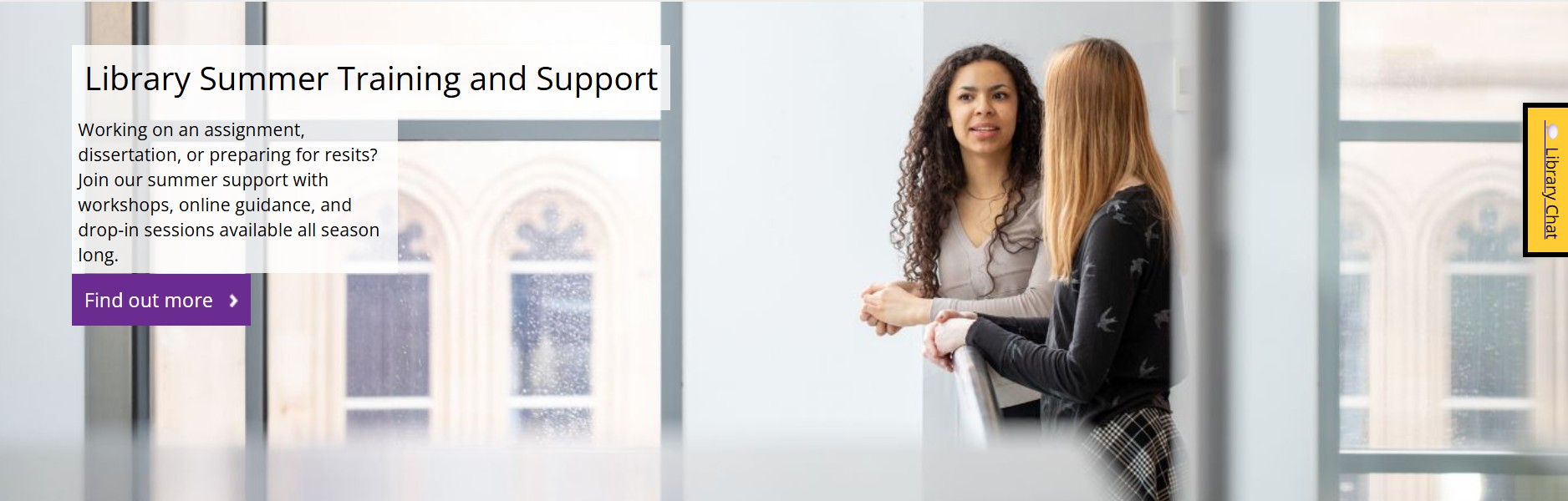
An ideal image for student communications depicting students using study spaces during exam season did not originally fit our website hero banner format. Due to the placement of the copy and the central positioning of the student subjects, the composition of this image does not work.
Photoshop’s Generative Expand was able to provide a solution. The tool can be accessed easily by following a few steps:
- Open the image and select the Crop tool
- Expand the canvas size by dragging using the mouse
- Click ‘Generate’ to use the Generative Expand function.
The result was a more flexible, well-composed image where both student subjects and accompanying text are better positioned.

The AI tool subtly extended architectural elements like the Christie Building’s windows to make the image feel seamless and natural, without misleading the viewer in any way, and this striking image is now able to be used as a web hero banner.
Example Two: Removing unwanted objects
Another use case involved a photo of the new portal entrance at the John Rylands Library, which featured an outdated opening hours sign in the window.

Using Content-Aware Fill, we were able to seamlessly remove this object. The steps are as follows:
- Select the sign using the Lasso tool
- Choose Edit > Content-aware fill
- Photoshop fills the selected area based on its surroundings.

The result is a clean, updated image suitable for use online, again without fabricating any new content or altering the essential reality of the photo.
Looking ahead: Opportunities and ethical boundaries
As these AI tools evolve, I believe there is clear potential for expanded use in our communications workflows; not to replace human creativity or oversight, but to enhance efficiency and allow us to focus more on strategy and storytelling.
That said, we are committed to staying within the ethical boundaries set out in the University’s AI guidelines. We will:
- Avoid editing human subjects in a way that changes their appearance or context
- Refrain from generating entirely fictitious people or places
- Use AI-generated content only when it complements existing, human-curated material
There are still valid concerns around copyright, authenticity, and quality when it comes to content created solely by AI. Human involvement is essential to ensure accuracy, context, and brand consistency.
Conclusion
Our experience so far with Photoshop’s AI tools has shown that generative technologies, when used thoughtfully, can solve practical challenges in digital communications without compromising the integrity of our visuals. These tools offer valuable efficiencies and creative possibilities, especially when used to enhance, rather than fabricate, reality.
As we move forward, we’ll continue to explore AI responsibly, remaining transparent about its use and ensuring that our communications uphold the trust of our audiences.
Lindsay Wilson
(Web and Digital Design Developer, The University of Manchester Library)